
802 Campus Placements - 2026 :
720 Campus Placements - 2025 :

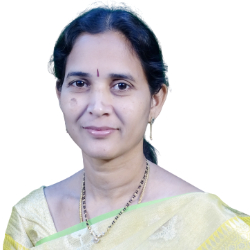
Dr. VNSR Venkateswara Rao
Associate Professor in Chemistry
AHSC06 - Chemistry
Number of ELRV - 67
Duration - 22:39:26
Date of Completion – 7/4/2021




The concepts developed in this course involve elements and compounds and their applied industrial applications. It deals with topics such as batteries, corrosion and control of metallic materials, water and its treatment for different purposes, engineering materials such as plastics, elastomers and biodegradable polymers, their preparation, properties and applications, energy sources and environmental science. Sustainable chemistry that focuses on the design of the products and processes that minimize or eliminate the use and generation of hazardous substances is also included.
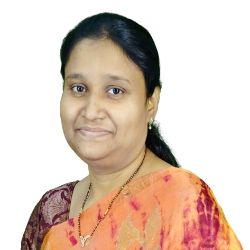
Dr. V Anitha Rani
Associate Professor in Chemsitry
AHSC06 - Chemistry
Number of ELRV - 69
Duration - 35:39:50
Date of Completion – 44296


The concepts developed in this course involve elements and compounds and their applied industrial applications. It deals with topics such as batteries, corrosion and control of metallic materials, water and its treatment for different purposes, engineering materials such as plastics, elastomers and biodegradable polymers, their preparation, properties and applications, energy sources and environmental science. Sustainable chemistry that focuses on the design of the products and processes that minimize or eliminate the use and generation of hazardous substances is also included.
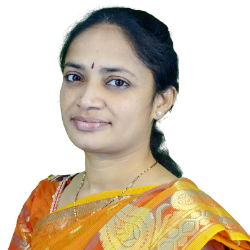
Dr. Rizwana
Associate Professor in Physics
AHSC03 - Engineering Physics
Number of ELRV - 66
Duration - 28:35:59
Date of Completion – 44298


This course develops abstract and critical reasoning by studying mathematical and logical proofs and assumptions as applied in basic physics and to make connections between physics and other branches of sciences and technology. The topics covered include waves, non-dispersive transverse and longitudinal waves, light and optics, wave optics, lasers, introduction to quantum mechanics, solution of wave equation and introduction to solids and semiconductors. The course helps students to gain knowledge of basic principles and appreciate the diverse applications in technological fields in respective branches.
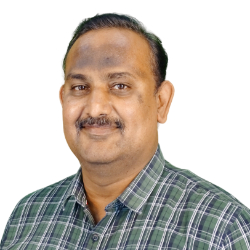
Dr. P Srilatha
Associate Professor in Mathematics
AHSC08 - Probability and Statistics
Number of ELRV - 66
Duration - 30:59:04
Date of Completion – 1/5/2021


Probability theory is the branch of mathematics that deals with modelling uncertainty. Inferential Statistics and regression analysis together with random variate distributions are playing an exceptional role in designing data driven technology which is familiarly known as data centric engineering. They also have wide variety applications in telecommunications and other engineering disciplines. The course covers advanced topics of probability and statistics with applications. The course includes: random variables, probability distributions, hypothesis testing, confidence intervals, and linear regression. There is an emphasis placed on real-world applications to engineering problems.

Dr. G Ramu
Professor of CSE
ACSC04 - Programming for Problem Solving using C
Number of ELRV - 66
Duration - 20:00:01
Date of Completion – 18/6/2021


The main emphasis of the course will be on problem solving aspects in through C programming. The students will understand programming language, programming, concepts of loops, reading a set of data, step wise refinements, functions, control structures, arrays, dynamic memory allocations, enumerated data types, structures, unions, and file handling. This course provides adequate knowledge to solve problems in their respective domains.
Dr. P Ashok Babu
Professor of ECE
AECC11 - Electromagnetic Waves and Transmission Lines
Number of ELRV - 66
Duration - 19:59:51
Date of Completion – 21/6/2021


Electromagnetic Waves and Transmission Lines gives the necessary information about the formation of magnetic fields when electric current flows and structures to conduct electromagnetic waves. It covers the fundamental concepts of electro-magnetic wave theory and introduces the basic laws of electromagnetic fields, time varying Maxwell’s equations, wave propagation and transmission lines. It provides a platform for advanced courses such as antennas and wave propagation, microwave engineering, transmission via wired links and optical fiber networks.
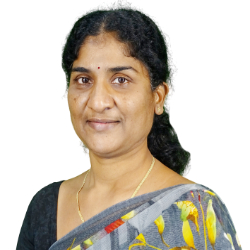
Ms. L Indira
Assistant Professor in Mathematics
AHSC02 - Linear Algebra and Calculus
Number of ELRV - 66
Duration - 22:49:15
Date of Completion – 9/7/2021


Linear algebra is a sub-field of mathematics concerned with vectors, matrices, and linear transforms. Calculus is the branch of mathematics which majorly deals with derivatives and integrals. Linear algebra is a key foundation to the field of machine learning. Matrices are used in computer animations, color image processing. Eigenvalues are used by engineers to discover new and better designs for the future. Differential equations have wide applications in various engineering and science disciplines as the laws of physics are generally written down as differential equations. The Fourier series has many applications in electrical engineering, image processing etc. The course includes types of Matrices, Rank, methods of finding rank, eigen values and eigen vectors, maxima and minima of functions of several variables, solutions of higher order ordinary differential equations and Fourier series.

Mr. A. Srikanth
Assistant Professor in EEE
AEEC02 - Electrical Circuits
Number of ELRV - 67
Duration - 27:22:44
Date of Completion – 18/8/2021


The course introduces the basic concepts of circuit analysis which is the foundation for all subjects of the electrical and electronics engineering. It includes the basic fundamental laws of electricity and magnetism with an emphasis on resistors, inductors and capacitors (RLC) circuits applied to alternating current (AC) or direct current (DC) of electrical networks. Further This course provides network theorems with different excitations, two-port network and network topology to solve for real-time applications
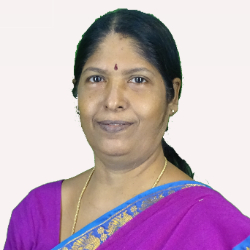
Dr. S Jagadha
Associate Professor in Mathematics
AHSC07 - Mathematical Transform Techniques
Number of ELRV - 68
Duration - 56:47:11
Date of Completion – 30/8/2021


This course focuses on transformations from theoretical based mathematical laws to its practical applications in the domain of various branches of engineering field. The course includes the transformations such as Laplace, Fourier, applications of scalar and vector field over surface, volume and multiple integrals. The course is designed to extract the mathematical developments, skills, from basic concepts to advance level of engineering problems to meet the technological challenges.
Dr. Rizwana
Associate Professor in Physics
AHSC09 - Applied Physics
Number of ELRV - 71
Duration - 39:51:18
Date of Completion – 4/9/2021


This course is structured specifically to make the students understand some of the core topics in physics essential for further studies in engineering. It focuses on illustrating and developing an understanding of the interplay between problem solving and their practical applications which include experimental techniques and modern equipment. The topics include quantum mechanics, semiconductors, opto-electronic devices, magnetism, dielectrics, lasers and fiber optics. At the end, this course helps students to appreciate the diverse real-time applications in technological fields in respective branches.
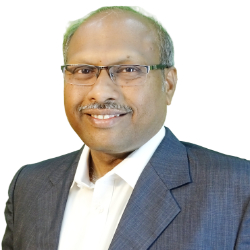
Mr. E Krishna Rao Patro
Assistant Professor in CSE
ACSC08 - Data Structures
Number of ELRV - 68
Duration - 35:31:06
Date of Completion – 29/9/2021


The course covers some of the general-purpose data structures and algorithms, and software development. Topics covered include managing complexity, analysis, static data structures, dynamic data structures and hashing mechanisms. The main objective of the course is to teach the students how to select and design data structures and algorithms that are appropriate for problems that they might encounter in real life. This course reaches to student by power point presentations, lecture notes, and lab which involve the problem solving in mathematical and engineering areas.
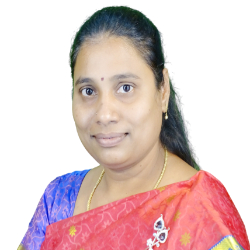
Dr. Vara Lakshmi Thavva
Professor of MBA
AHSC13 - Business Economics and Financial Analysis
Number of ELRV - 62
Duration - 24:29:35
Date of Completion – 5/10/2021


The present course is designed in such a way that it gives an overview of concepts of Economics. Managerial Economics enables students to understand micro environment in which markets operate how price determination is done under different kinds of competitions. Financial Analysis gives clear idea about concepts, conventions and accounting procedures along with introducing students to fundamentals of ratio analysis and interpretation of financial statements. Break Even Analysis is very helpful to the Business Concern for Decision Making, controlling and forward Strategic Planning. Ratio analysis gives an idea about financial forecasting, financial planning, controlling the business and decision making.

Dr. J Suresh Goud
Associate Professor in Mathematics
AHSC08 - Probability and Statistics
Number of ELRV - 66
Duration - 20:00:01
Date of Completion – 3/11/2021


Probability theory is the branch of mathematics that deals with modelling uncertainty. Inferential Statistics and regression analysis together with random variate distributions are playing an exceptional role in designing data driven technology which is familiarly known as data centric engineering. They also have wide variety applications in telecommunications and other engineering disciplines. The course covers advanced topics of probability and statistics with applications. The course includes: random variables, probability distributions, hypothesis testing, confidence intervals, and linear regression. There is an emphasis placed on real-world applications to engineering problems.
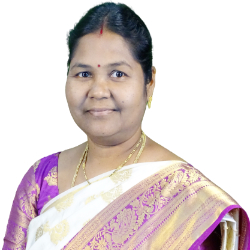
Dr. B Padmaja
Associate Professor in CSE (AI&ML)
ACSC04 - Programming for Problem Solving using C
Number of ELRV - 72
Duration - 35:43:56
Date of Completion – 6/11/2021


The main emphasis of the course will be on problem solving aspects in through C programming. The students will understand programming language, programming, concepts of loops, reading a set of data, step wise refinements, functions, control structures, arrays, dynamic memory allocations, enumerated data types, structures, unions, and file handling. This course provides adequate knowledge to solve problems in their respective domains.
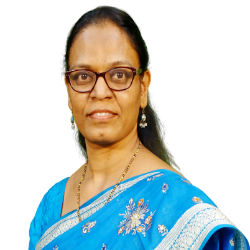
Ms. Singavarapu Sujani
Assistant Professor in Physics
AHSC03 - Engineering Physics
Number of ELRV - 66
Duration - 54:04:08
Date of Completion – 22/11/2021


This course develops abstract and critical reasoning by studying mathematical and logical proofs and assumptions as applied in basic physics and to make connections between physics and other branches of sciences and technology. The topics covered include waves, non-dispersive transverse and longitudinal waves, light and optics, wave optics, lasers, introduction to quantum mechanics, solution of wave equation and introduction to solids and semiconductors. The course helps students to gain knowledge of basic principles and appreciate the diverse applications in technological fields in respective branches.
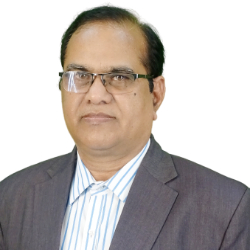
Dr. Yagya Dutta Dwivedi
Associate Professor in AE
AAEB13 - Aircraft Stability and Control
Number of ELRV - 66
Duration - 38:20:02
Date of Completion – 23/11/2021


Aircraft Stability and Control is the science that investigates the stability and control of aircrafts and all other flying vehicles. From the advent of the first flight by the Wright Brothers, it was observed that flight without knowledge of stability and control was not viable. Since then, several different concepts for controlling aircraft flight have been devised including control surfaces, deformable surfaces, morphing of wings etc. This course introduces some of these concepts and describes their operation, as well as the degree of stability that these devices can provide. Modern aircraft control is ensured through automatic control systems known as autopilot. Their role is to increase safety, facilitate the pilot’s task and improve flight qualities. The course will introduce modern aircraft stability and control and discuss some of its objectives and applications.

Dr. J Sirisha Devi
Professor of CSE
ACSC08 - Data Structures
Number of ELRV - 66
Duration - 37:25:32
Date of Completion – 1/12/2021


The course covers some of the general-purpose data structures and algorithms, and software development. Topics covered include managing complexity, analysis, static data structures, dynamic data structures and hashing mechanisms. The main objective of the course is to teach the students how to select and design data structures and algorithms that are appropriate for problems that they might encounter in real life. This course reaches to student by power point presentations, lecture notes, and lab which involve the problem solving in mathematical and engineering areas.
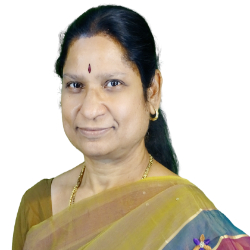
Dr. K Suvarchala
Associate Professor in CSE
AITC05 - Database Management Systems
Number of ELRV - 66
Duration - 43:37:43
Date of Completion – 2/12/2021


The purpose of this course is to provide a clear understanding of fundamentals with emphasis on their applications to create and manage large data sets. It highlights on technical overview of database software to retrieve data from n database. The course includes database design principles, normalization, concurrent transaction processing, security, recovery and file organization techniques.
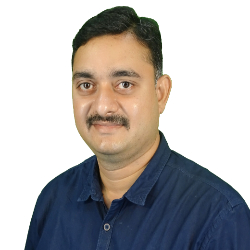
Dr. B D Y Sunil
Associate Professor in ME
AMEC01 - Engineering Mechanics
Number of ELRV - 66
Duration - 20:17:18
Date of Completion – 3/12/2021


Engineering Mechanics is a branch of Physics that deals with the study of the system of forces acting on a particle which is at rest or in motion. The course emphasizes thorough understanding of theories and principles related to static and dynamic equilibrium of rigid bodies to acquire the analytical capability required for solving engineering problems and is one of the foundation courses that forms the basis of many of the traditional branches of engineering such as aerospace, civil and mechanical engineering.
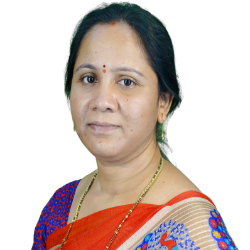
Ms. B Laxmiprasanna
Assistant Professor in ECE
AECB55 - Microprocessors and Interfacing
Number of ELRV - 66
Duration - 57:45:59
Date of Completion – 24/12/2021


Processor and Controller cores are the key components in most of the modern embedded and systemon-chip designs. This course outlines the architecture and signal description of Intel microprocessor and microcontrollers. The instruction set and assembly language programming along with I/O and memory interfacing techniques are covered. The knowledge acquired from this course will enable the students in development of embedded hardware projects and models for engineering and scientific applications.
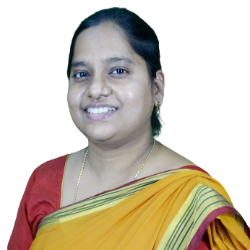
Dr. Sudeepthi Dondapati
Assistant Professor in English
Skill Enhancement
Number of ELRV - 66
Duration - 46:04:56
Date of Completion – 11/1/2022


The sole aim of the course is to enhance the communication skills of upcoming engineering graduates to meet the requirements and challenges in a competitive global world. This course is designed to provide a well-rounded introduction to English language learning. Moreover, the course pays special attention to the typical problems and challenges confronted by the Indian learners of English like mispronunciation, spellings, and structures of English due to their mother tongue influence. This course includes General Introduction to Listening Skills, Speaking Skills, Vocabulary and Grammar, Reading Skills, and Writing Skills.
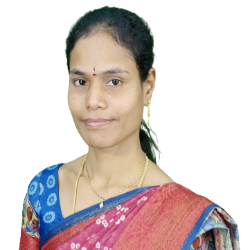
Ms. L Babitha
Assistant Professor in ECE
AECC07 - Analog Electronics
Number of ELRV - 66
Duration - 51:33:38
Date of Completion – 12/3/2022


This course introduces the fundamentals and principles of semiconductor devices and circuits. Apply the characteristics of diodes, bipolar, uni-polar transistors and operational amplifiers for designing rectifiers, clippers, clampers, amplifiers, oscillators and waveform generators. It provides skills for analyzing amplifier circuits using small signal model and hybrid pi model.
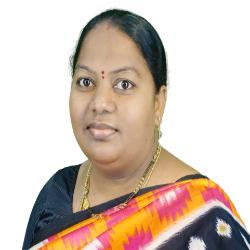
Ms. M Sreevani
Assistant Professor in ECE
AECC11 - Electromagnetic Waves and Transmission Lines
Number of ELRV - 66
Duration - 48:51:02
Date of Completion – 29/3/2022


This course gives the necessary information about the formation of magnetic fields when electric current flows and structures to conduct electromagnetic waves. It covers the fundamental concepts of electro-magnetic wave theory and introduces the basic laws of electromagnetic fields, time varying Maxwell‟s equations, wave propagation and transmission lines. It provides a platform for advanced courses such as antennas and wave propagation, microwave engineering, transmission via wired links, radio channels and optical fiber networks.
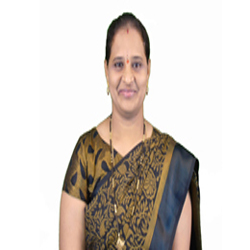
Ms. S Swathi
Assistant Professor in ECE
AECC08 - Analog and Digital Electronics
Number of ELRV - 67
Duration - 53:46:08
Date of Completion – 16/4/2022


This course provides the basic knowledge over the construction and functionality of the basic electronic devices such as diodes and transistors. It also provides the information about the uncontrollable and controllable electronic switches and the flow of current through these switches in different biasing conditions and also will make them to learn the basic theory of switching circuits and their applications in specified relationship between signals at the input and output terminals. They will be able to design combinational and sequential circuits detail. Starting from a problem statement they will learn to design circuits of logic gates that have a.They will learn to design counters, adders, sequence detectors.
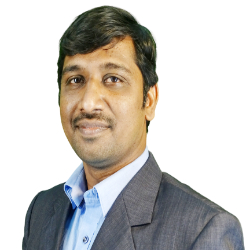
Mr. B Naresh
Assistant Professor in ECE
AECC01 - Electronic Devices and Circuits
Number of ELRV - 66
Duration - 46:53:26
Date of Completion – 2/5/2022


This course provides the basic knowledge over the construction and functionality of the basic electronic devices such as diodes and transistors. It also provides the information about the electronic switches and the flow of current through these switches in different biasing conditions. This course is intended to describe the different configurations to provide temperature stability and how these electronic devices can be configured to work as rectifiers, clippers, voltage regulators, clampers and amplifiers.

Dr. K Viswanath Allamraju
Professor of ME
AMEC10 - Kinematics of Machinery
Number of ELRV - 67
Duration - 38:16:56
Date of Completion – 13/6/2022


Mechanical devices are designed to have mobility to perform certain functions. The theory behind the study of Kinematics of Machine leads us to design machines by understanding the relationship between the geometry and the motion of various parts of machine. This course will provide the knowledge on how to analyze the motions of mechanisms and design synthesis mechanisms to give required mobility. This includes relative motion analysis and design of gears, gear trains, cams, linkages and steering mechanism gears by adopting simultaneously both graphical and analytical approaches to estimate displacement, velocity and acceleration of links in a machine.
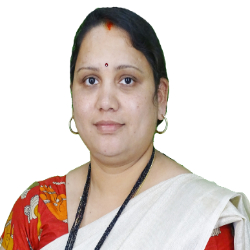
Ms. S Veena
Assistant Professor in English
AHSC01 - English
Number of ELRV - 66
Duration - 44:06:07
Date of Completion – 20/6/2022


The sole aim of the course is to enhance the communication skills of upcoming engineering graduates to meet the requirements and challenges in a competitive global world. This course is designed to provide a well-rounded introduction to English language learning. Moreover, the course pays special attention to the typical problems and challenges confronted by the Indian learners of English like mispronunciation, spellings, and structures of English due to their mother tongue influence. This course includes General Introduction to Listening Skills, Speaking Skills, Vocabulary and Grammar, Reading Skills, and Writing Skills.
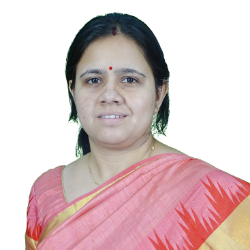
Dr. Shikha Kumari Pandey
Assistant Professor in Chemistry
AHSB07 - Environmental Studies
Number of ELRV - 66
Duration - 42:28:33
Date of Completion – 25/6/2022


Environmental study is interconnected interrelated and interdependent subject. Hence, it is multidisciplinary in nature. The present course is framed by expert committee of UGC under the direction of honorable supreme court to be as a core module syllabus for all branches of higher education and to be implemented in all universities over India. The course is designed to create environmental awareness and consciousness among the present generation to become environmental responsible citizens. The course description is multidisciplinary nature of environmental studies, natural resources Renewable and non-renewable resources Ecosystems Biodiversity and its conservation Environmental pollution Social issues and the environment Human population and the environment Pollution control acts and field work. T
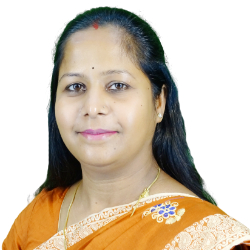
Ms. Priyanka Gupta
Assistant Professor in CSE (DS)
AITC17 - Data Warehousing and Data Mining
Number of ELRV - 66
Duration - 41:39:08
Date of Completion – 2/7/2022


Data mining refers to extracting or mining knowledge from large amounts of data. It emphasizes various techniques and algorithms used to explore, analyze and leverage data and turn it into valuable and actionable information. It includes data warehousing and data mining functionalities such as analytical processing, descriptive analysis, association mining, classification, clustering and outlier analysis. The techniques are used to tackle data centric applications in various domains such as financial analysis, telecommunication industry, intrusion detection, and complex data mining applications in stream, web, text, spatial and other scientific applications.
Dr. Yagya Dutta Dwivedi
Professor in Aeronautical Engineering
AAEB21- Aircraft Systems
Number of ELRV - 66
Duration - 48:15:22
Date of Completion – 28/7/2022


The Aircraft Systems Overview course provides students with a comprehensive understanding of the various systems installed in modern aircraft. Through theoretical study and practical demonstrations, students will gain insight into the function, operation, and interconnectivity of essential aircraft systems. Emphasis will be placed on safety considerations, troubleshooting techniques, and the integration of advanced technologies within aviation systems.
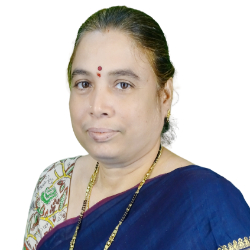
Dr. B J D Kalyani
Associate Professor in CSE
ACSC07 - Computer Organization and Architecture
Number of ELRV - 66
Duration - 42:14:15
Date of Completion – 17/08/2022


Computer Organization and Architecture (COA) is a core subject that explores the design, structure, and functioning of computer systems. It explains how hardware components work together to execute instructions efficiently and how architectural decisions influence system performance. This session covers computer architecture vs. computer organization, functional units of a computer, CPU organization, instruction set architecture (ISA), registers, arithmetic logic unit (ALU), control unit, memory hierarchy, cache memory, input/output organization, system buses, pipelining, parallel processing, instruction execution cycle, and performance evaluation. Learners will develop a strong understanding of modern computer hardware and its role in efficient program execution.understand how to design efficient, safe, and high-performance multithreaded applications while avoiding common concurrency issues.
Dr. K Viswanath Allamraju
Professor in MECH
AMEC05 - Solid Mechanics
Number of ELRV - 73
Duration - 36:07:35
Date of Completion – 25/08/2022


Solid Mechanics is a branch of mechanics and engineering science that studies the behaviour of solid materials when they are subjected to external forces, loads, temperature changes, and other environmental effects. It focuses on how materials and structures deform, carry loads, and eventually fail under different loading conditions. The subject includes the study of stress, strain, elasticity, plasticity, strength, stiffness, and fracture. Solid Mechanics is widely applied in the design and analysis of buildings, bridges, machines, automobiles, aircraft, pressure vessels, mechanical components, and other engineering structures. It helps engineers ensure that structures and components are safe, reliable, durable, and capable of performing their intended functions.
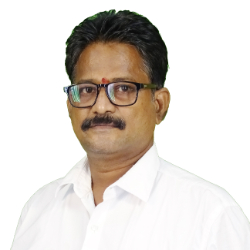
Dr. N. Venkatachalapathi
Professor in MECH
AMEC11 - Manufacturing Processes
Number of ELRV - 66
Duration - 36:39:30
Date of Completion – 27/09/2022


Manufacturing Processes is a branch of engineering that deals with the methods, techniques, and technologies used to convert raw materials into finished products or components. It involves understanding how materials such as metals, plastics, ceramics, and composites are shaped, formed, joined, and finished to achieve the required dimensions, quality, and performance. The subject covers a wide range of processes, including casting, metal forming, machining, welding, joining, additive manufacturing (3D printing), and surface finishing. It also introduces modern manufacturing technologies such as CNC machining, automation, robotics, and computer-integrated manufacturing. Manufacturing Processes is essential in mechanical, automobile, aerospace, civil, electrical, and production engineering because it helps engineers select suitable manufacturing methods based on material properties, product design, accuracy, production volume, cost, and quality requirements.
Ms. Singavarapu Sujani
Assistant Professor in PHYSICS
AHSC09 - Applied Physics
Number of ELRV - 66
Duration - 52:44:09
Date of Completion – 30/10/2022


Applied Physics is a branch of physics that focuses on applying the principles, laws, and theories of physics to practical problems and real-world applications. It connects fundamental physics concepts with engineering, technology, and industrial development. The subject covers areas such as mechanics, heat and thermodynamics, electricity and magnetism, optics, waves, materials science, and modern physics. These principles are used to understand and develop technologies such as electronic devices, communication systems, sensors, renewable energy systems, medical instruments, and advanced materials. Applied Physics is important in engineering and technology because it helps students understand the physical principles behind the machines, devices, and systems they design and use.

Dr. Indradeep Kumar
Assistant Professor in AERO
AAEC15 - Analysis of Aircraft Structures
Number of ELRV - 66
Duration - 35:50:44
Date of Completion – 27/12/2022


Analysis of Aircraft Structures is an important subject in aerospace and aeronautical engineering that deals with the study and evaluation of the strength, stiffness, stability, and structural integrity of aircraft components under various loading conditions. The subject focuses on understanding how aircraft structures such as wings, fuselage, landing gear, tail assemblies, and other structural components respond to aerodynamic forces, weight, engine loads, landing impacts, vibration, and other operational stresses. Engineers analyse these structures to ensure that they are safe, lightweight, reliable, and capable of withstanding the loads experienced during flight and ground operations.
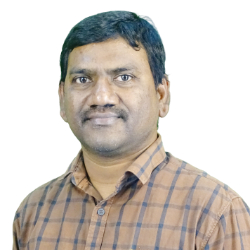
Dr. V Kishen Ajay Kumar
Assistant Professor in ECE
AECB18 - Antennas and Wave Propagation
Number of ELRV - 66
Duration - 40:56:35
Date of Completion – 02/01/2023


Antennas and Wave Propagation is a fundamental subject in electronics and communication engineering that deals with the design, operation, and performance of antennas, as well as the transmission of electromagnetic (EM) waves through different media. It explains how information is transmitted wirelessly from one location to another using radio waves, microwaves, and other electromagnetic waves. An antenna is a transducer that converts electrical signals into electromagnetic waves during transmission and converts received electromagnetic waves back into electrical signals during reception. Antennas are essential components in wireless communication systems such as radio, television broadcasting, satellite communication, radar, mobile networks, Wi-Fi, and GPS. Different types of antennas, including dipole, monopole, loop, horn, parabolic reflector, microstrip patch, and helical antennas, are designed to meet specific communication requirements such as frequency, gain, directivity, and bandwidth. Wave propagation refers to the manner in which electromagnetic waves travel from the transmitting antenna to the receiving antenna. The characteristics of propagation depend on factors such as frequency, atmospheric conditions, terrain, and obstacles. The three primary modes of radio wave propagation are:
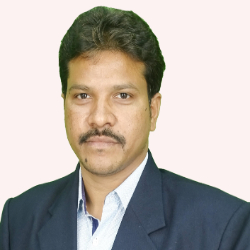
Dr. B Ravi kumar
Assistant Professor in ECE
AECC08 - Analog and Digital Electronics
Number of ELRV - 66
Duration - 40:17:43
Date of Completion – 10/01/2023


Analog and Digital Electronics is a fundamental engineering subject that focuses on the principles and applications of analog and digital electronic circuits. It covers semiconductor devices, diodes, transistors, amplifiers, logic gates, combinational and sequential circuits, flip-flops, counters, and registers. The course provides the knowledge required to analyze, design, and implement electronic systems used in communication, computing, automation, and embedded applications. It forms the foundation for modern electronic and digital technologies.
Dr. Yagya Dutta Dwivedi
Associate Professor in AERO
AAEC02 - Engineering Thermodynamics
Number of ELRV - 66
Duration - 38:04:12
Date of Completion – 27/01/2023


Engineering Thermodynamics is a core engineering subject that deals with the principles of energy, heat, and work, and their interactions in engineering systems. It covers the laws of thermodynamics, properties of pure substances, energy conversion processes, thermodynamic cycles, and the performance of engines, turbines, compressors, and refrigeration systems. The course provides the foundation for analyzing and designing efficient energy systems used in mechanical, aerospace, and other engineering applications.
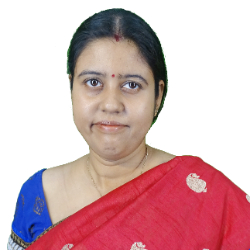
Dr. Sayanti Chatterjee
Associate Professor in EEE
AEEC06 - Electromagnetic Fields
Number of ELRV - 66
Duration - 43:06:21
Date of Completion – 16/02/2023


Electromagnetic Fields is a fundamental engineering subject that studies the behavior of electric and magnetic fields and their interactions. It covers electrostatics, magnetostatics, Maxwell's equations, electromagnetic waves, and field propagation. The course provides the theoretical foundation for understanding antennas, wireless communication, electrical machines, transmission lines, and various electronic and communication systems.
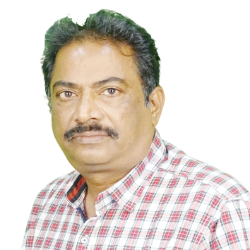
Dr. S Sreekanth
Associate Professor in CSE (DS)
AITC01 - Discrete Mathematical Structures
Number of ELRV - 69
Duration - 48:26:08
Date of Completion – 23/02/2023


Discrete Mathematical Structures is a foundational subject in computer science and engineering that focuses on mathematical concepts used in computing and problem-solving. It covers topics such as logic, sets, relations, functions, graphs, trees, combinatorics, and Boolean algebra. The course develops analytical and reasoning skills essential for algorithm design, data structures, computer programming, cryptography, and digital system design.
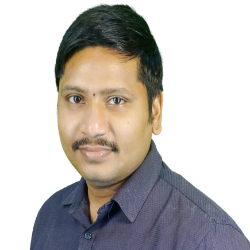
Dr. M Lakshmi Prasad
Associate Professor in CSE (DS)
ACDC03 - Data Management and Representation
Number of ELRV - 67
Duration - 35:05:27
Date of Completion – 23/02/2023


Data Management and Representation is a fundamental subject that focuses on the organization, storage, processing, and representation of data in computer systems. It covers data models, database concepts, data structures, file organization, data encoding, and information representation techniques. The course provides the knowledge required to manage data efficiently, ensuring accuracy, consistency, security, and effective retrieval in modern computing and information systems.
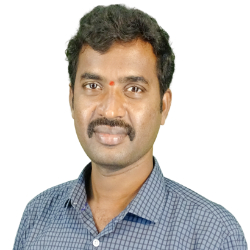
Dr. Naresh Kumar
Assistant Professor in Mathematics
AHSD08 - Differential Equation and Vector Calculus
Number of ELRV - 67
Duration - 58:08:00
Date of Completion – 04/03/2023


Differential Equations and Vector Calculus is a core mathematics subject that provides the analytical tools required to model and solve engineering and scientific problems. It covers ordinary differential equations, vector algebra, vector differentiation, multiple integrals, and vector calculus concepts such as gradient, divergence, curl, and line and surface integrals. The course develops the mathematical foundation essential for engineering analysis, physics, fluid mechanics, electromagnetics, and other advanced engineering applications.
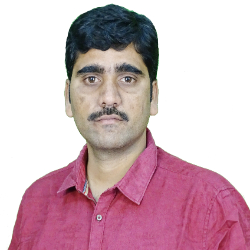
Mr. Y Manohar Reddy
Assistant Professor in CSE (CS)
ACCC03 - Network Security
Number of ELRV - 66
Duration - 35:10:30
Date of Completion – 11/03/2023


Network Security is a fundamental subject that focuses on protecting computer networks and data from unauthorized access, cyber threats, and attacks. It covers security principles, cryptography, authentication, firewalls, intrusion detection systems, virtual private networks (VPNs), and network security protocols. The course equips students with the knowledge and skills to design, implement, and maintain secure and reliable network infrastructures.
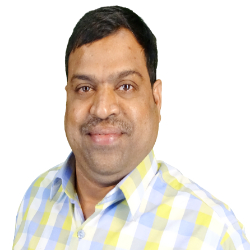
Mr. B Santhosh Kumar
Assistant Professor in ECE
AECC26 - Image Processing
Number of ELRV - 66
Duration - 0:42:11
Date of Completion – 25/03/2023
Image Processing is a fundamental subject that focuses on the acquisition, enhancement, analysis, and interpretation of digital images using computational techniques. It covers image representation, filtering, segmentation, feature extraction, image compression, and pattern recognition. The course provides the foundation for applications such as medical imaging, computer vision, remote sensing, surveillance, robotics, and multimedia systems.
Dr. Shikha Kumari Pandey
Assistant Professor in CHEMISTRY
AHSB07 - Solid Waste Management
Number of ELRV - 66
Duration - 35:19:55
Date of Completion – 04/04/2023


Solid Waste Management is an environmental engineering subject that focuses on the efficient collection, segregation, transportation, treatment, recycling, and safe disposal of solid waste. It covers waste generation, waste characterization, resource recovery, composting, sanitary landfills, and sustainable waste management practices. The course aims to promote environmental protection, public health, and the efficient use of resources through effective waste management strategies.
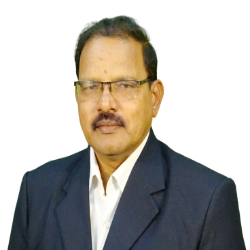
Dr. D Govardhan
Professor in AERO
AMEC01 - Engineering Mechanics
Number of ELRV - 67
Duration - 35:00:35
Date of Completion – 18/04/2023


Engineering Mechanics is a fundamental engineering subject that deals with the principles of forces and their effects on bodies at rest and in motion. It covers statics, dynamics, equilibrium, friction, kinematics, kinetics, and the analysis of structures and mechanical systems. The course provides the foundation for solving engineering problems related to the design, analysis, and performance of machines and structures.
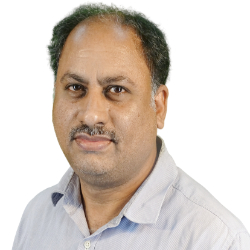
Dr. U Sivaji
Associate Professor in IT
CSC40 - Compiler Design
Number of ELRV - 66
Duration - 40:06:00
Date of Completion – 18/05/2023


Compiler Design is a core computer science subject that focuses on the principles and techniques used to translate high-level programming languages into machine code. It covers lexical analysis, syntax analysis, semantic analysis, intermediate code generation, code optimization, and target code generation. The course provides the foundation for developing efficient compilers and understanding programming language implementation, enabling students to build reliable and optimized software systems.
Dr. K Viswanath Allamraju
Professor in MECH
AMEC01 - Engineering Mechanics
Number of ELRV - 66
Duration - 37:17:30
Date of Completion – 15/06/2023


Engineering Mechanics is a fundamental engineering subject that focuses on the study of forces, motion, and the behavior of rigid bodies. It covers the principles of statics, dynamics, equilibrium, friction, kinematics, and kinetics, providing the foundation for analyzing and designing engineering structures and mechanical systems.
Dr. A Naresh Kumar
Assistant Professor in EEE
AEEC01 - Basic Electrical Engineering
Number of ELRV - 66
Duration - 37:51:50
Date of Completion – 30/06/2023


Basic Electrical Engineering is the study of the fundamental principles of electricity, electrical circuits, and electrical devices. It covers concepts such as voltage, current, resistance, Ohm's law, AC and DC circuits, electrical machines, transformers, and power systems. This subject provides the foundation for understanding, designing, and maintaining electrical and electronic systems.
Mr. Y Manohar Reddy
Assistant Professor in CSE (CS)
AITC05 - Database Management Systems
Number of ELRV - 66
Duration - 35:16:30
Date of Completion – 11/07/2023


A Database Management System (DBMS) is software used to create, store, organize, retrieve, and manage data efficiently. It enables users to perform operations such as inserting, updating, deleting, and querying data while ensuring data security, integrity, and consistency. DBMS is widely used in applications such as banking, education, healthcare, and e-commerce.
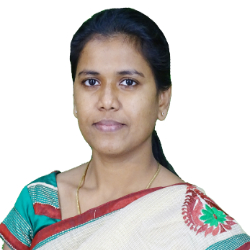
Ms. Y Meghamala
Assistant Professor in ECE
AECC49 - Digital design through Verilog
Number of ELRV - 66
Duration - 42:57:43
Date of Completion – 12/07/2023


Digital Design through Verilog is the study of designing and modeling digital electronic circuits using the Verilog Hardware Description Language (HDL). It covers topics such as logic gates, combinational and sequential circuits, finite state machines, and hardware simulation. Verilog is widely used for designing, testing, and implementing digital systems on FPGAs and ASICs.
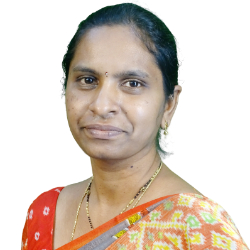
Ms. G Mary Swarnalatha
Assistant Professor in ECE
AECC04 - Probability Theory and Stochastic Processes
Number of ELRV - 66
Duration - 42:38:05
Date of Completion – 15/07/2023


Probability Theory and Stochastic Processes is the study of randomness, uncertainty, and mathematical models for random events. It covers topics such as probability distributions, random variables, stochastic processes, Markov chains, and queueing theory. This subject provides the foundation for analyzing uncertain systems and is widely used in communications, signal processing, finance, and engineering.
Dr. Yagya Dutta Dwivedi
Associate Professor in AERO
AAEC09 - Flight Mechanics
Number of ELRV - 66
Duration - 35:19:10
Date of Completion – 19-07-2023


Flight Mechanics is the study of the motion, stability, and control of aircraft during flight. It covers topics such as aerodynamic forces, aircraft performance, flight dynamics, stability, and maneuverability. This subject helps in understanding how aircraft fly safely and efficiently and is essential for the design, analysis, and operation of aerospace vehicles.
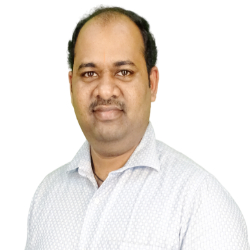
Mr. D Atchuta Ramacharyulu
Assistant Professor in MECH
AMEC35 - Elements of Mechanical Engineering
Number of ELRV - 66
Duration - 37:21:52
Date of Completion – 26/07/2023
Elements of Mechanical Engineering is the study of the basic principles and components of mechanical systems. It covers topics such as engineering materials, thermodynamics, manufacturing processes, machine elements, engines, and power transmission. This subject provides a foundation for understanding the design, operation, and maintenance of mechanical equipment and industrial systems.
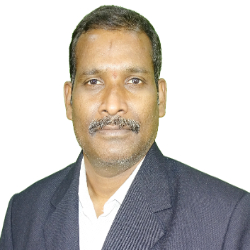
Dr. GVR Seshagiri Rao
Professor in MECH
AMEB23 - Design of Machine Elements
Number of ELRV - 76
Duration - 30:26:14
Date of Completion – 24/08/2023

Design of Machine Elements is the study of designing mechanical components that can safely and efficiently withstand various loads and operating conditions. It covers topics such as shafts, gears, bearings, springs, fasteners, and joints, along with material selection and failure analysis. This subject provides the knowledge required to design reliable, durable, and cost-effective mechanical systems.
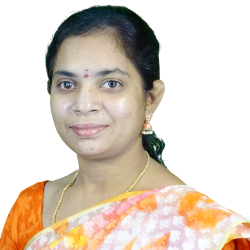
Ms M Himabindu
Assistant Professor in IT
AITC04 - Theory of Computation
Number of ELRV - 66
Duration - 36:44:47
Date of Completion – 31/08/2023


Theory of Computation is the study of the mathematical foundations of computer science and the capabilities of computational models. It covers topics such as finite automata, regular languages, context-free grammars, Turing machines, and computational complexity. This subject helps in understanding how problems are solved by computers and the limits of computation.

Dr. V Sivanagaraju
Associate Professor in ECE
AECC10 - Analog and Digital Communications
Number of ELRV - 71
Duration - 35:09:34
Date of Completion – 13/10/2023


Analog and Digital Communications introduces the principles and techniques of transmitting information using analog and digital communication systems. It covers signal modulation and demodulation, noise analysis, pulse modulation, digital transmission, multiplexing, and communication networks, enabling students to understand and design reliable communication systems for modern telecommunication applications.

Mr. Athota Rathan Babu
Assistant Professor in AERO
AAEC25 - Computational Aerodynamics
Number of ELRV - 69
Duration - 35:14:25
Date of Completion – 10/11/2023


Computational Aerodynamics is the study of airflow around aircraft and other bodies using numerical methods and computer simulations. It covers topics such as Computational Fluid Dynamics (CFD), aerodynamic modeling, mesh generation, turbulence modeling, and flow analysis. This subject helps engineers analyze, predict, and optimize aerodynamic performance, reducing the need for costly wind tunnel testing and physical prototypes.
Dr. B Divya
Assistant Professor in CHEMISTRY
AHSC06 - Engineering Chemistry
Number of ELRV - 70
Duration - 34:55:15
Date of Completion – 11/11/2023


Engineering Chemistry is the study of chemical principles and their applications in engineering and technology. It covers topics such as water treatment, corrosion, polymers, fuels, electrochemistry, nanomaterials, and environmental chemistry. This subject helps engineers understand material properties, improve industrial processes, and develop sustainable engineering solutions.
Dr. M Lakshmi Prasad
Associate Professor in CSE (DS)
ACDC01 - Principles of Data Science
Number of ELRV - 67
Duration - 35:10:50
Date of Completion – 01/12/2023


Principles of Data Science is the study of techniques for collecting, processing, analyzing, and interpreting data to extract meaningful insights. It covers topics such as data preprocessing, visualization, statistical analysis, machine learning, and data-driven decision-making. This subject provides the foundation for solving real-world problems using data and supports applications in business, healthcare, finance, and engineering.

Dr. Shuaib Mohammad Bhat
Assistant Professor in ENGLISH
AHSD01 - Professional Communication
Number of ELRV - 70
Duration - 50:13:50
Date of Completion – 27/12/2023


Professional Communication is the study of effective verbal, written, and interpersonal communication skills required in academic and workplace environments. It covers topics such as business correspondence, presentations, group discussions, technical writing, interview skills, and professional ethics. This subject helps individuals communicate clearly, build strong professional relationships, and succeed in their careers.
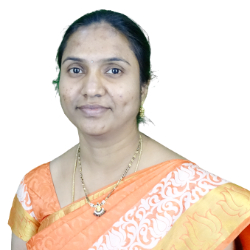
Ms. B Sravanthi
Assistant Professor in CHEMISTRY
AHSC06 - Engineering Chemistry
Number of ELRV - 66
Duration - 37:59:07
Date of Completion – 05/01/2024


Engineering Chemistry is the study of chemical principles and their applications in engineering and technology. It covers topics such as water treatment, corrosion, polymers, fuels, electrochemistry, nanomaterials, and environmental chemistry. This subject helps engineers understand material properties, improve industrial processes, and develop sustainable engineering solutions.
Ms. B Laxmi Prasanna
Assistant Professor in ECE
AECC26 - Image Processing
Number of ELRV - 66
Duration - 35:22:26
Date of Completion – 08/01/2024


Image Processing is the study of techniques used to acquire, enhance, analyze, and manipulate digital images using computer algorithms. It covers topics such as image enhancement, filtering, segmentation, feature extraction, compression, and pattern recognition. This subject is widely used in medical imaging, computer vision, remote sensing, robotics, and multimedia applications.
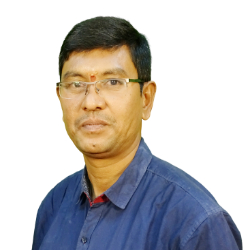
Mr. P Shantan Kumar
Assistant Professor in MATHEMATICS
AHSD02 - Matrices and Calculus
Number of ELRV - 68
Duration - 44:15:11
Date of Completion – 08/01/2024


Matrices and Calculus is the study of matrix algebra and differential and integral calculus used to solve engineering and scientific problems. It covers topics such as matrix operations, determinants, eigenvalues, limits, differentiation, integration, and applications of calculus. This subject provides the mathematical foundation for engineering analysis, modeling, and problem-solving.
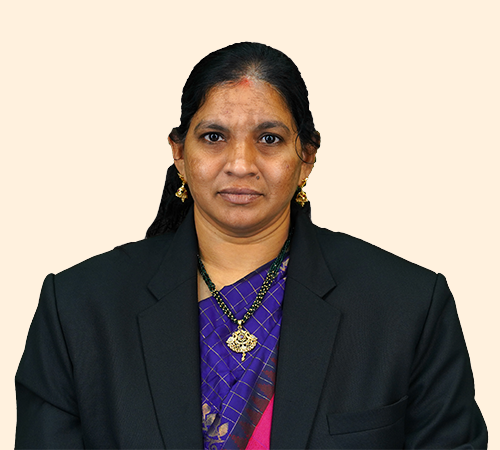
Dr. P Lavanya
Associate Professor in MBA
CMBC03 - Managerial Economics
Number of ELRV - 66
Duration - 39:24:07
Date of Completion – 05/02/2024


Managerial Economics is the application of economic principles and analytical methods to business decision-making. It helps managers make effective decisions regarding pricing, production, cost control, resource allocation, and profit maximization by analyzing market conditions and consumer behavior.
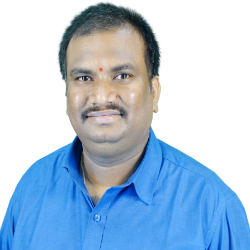
Mr. S Srikanth
Assistant Professor in EEE
AEED01 - Elements of Electrical and Electronics Engineering
Number of ELRV - 66
Duration - 35:52:44
Date of Completion – 15/02/2024


Elements of Electrical and Electronics Engineering introduces the fundamental concepts of electrical and electronic systems. It covers topics such as electric circuits, electrical machines, transformers, semiconductor devices, digital electronics, and basic power systems, providing a foundation for understanding and designing modern electrical and electronic applications.
Mr. E Krishna Rao Patro
Assistant Professor in CSE
ACSD01 - Programming with Objects
Number of ELRV - 66
Duration - 42:40:17
Date of Completion – 16/02/2024


Programming with Objects introduces the principles of object-oriented programming (OOP), including classes, objects, inheritance, polymorphism, encapsulation, and abstraction. It enables students to develop modular, reusable, and efficient software by modeling real-world entities and solving complex programming problems.
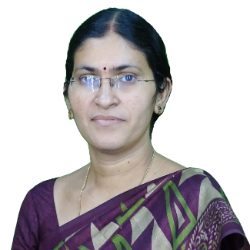
Dr. M Laxmidevi Ramanaiah
Associate Professor in CSE (DS)
ACSC04 - Programming for Problem Solving using C
Number of ELRV - 66
Duration - 35:42:11
Date of Completion – 16/02/2024


Programming for Problem Solving using C introduces the fundamentals of programming using the C language. It covers concepts such as variables, data types, operators, control statements, functions, arrays, pointers, and file handling, enabling students to develop logical thinking and solve computational problems efficiently.
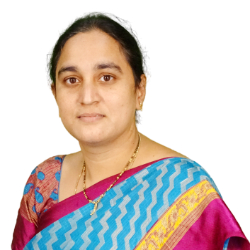
B. Praveena
Assistant Professor in Mathematics
AHSD02 - Matrices and Calculus
Number of ELRV - 66
Duration - 30:59:27
Date of Completion – 14/03/2024


Matrices and Calculus introduces the fundamental concepts of linear algebra and differential and integral calculus. It covers matrices, systems of linear equations, limits, continuity, differentiation, and integration, providing essential mathematical tools for solving engineering, scientific, and real-world problems.
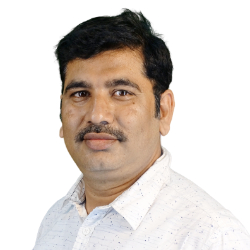
Dr. Khalandar Basha
Assistant Professor in ECE
AECC19 - Microprocessors and Microcontrollers
Number of ELRV - 66
Duration - 36:53:39
Date of Completion – 07/05/2024


Microprocessors and Microcontrollers introduces the architecture, programming, and applications of microprocessors and microcontrollers. It covers instruction sets, memory organization, interfacing techniques, and embedded system design, enabling students to develop hardware–software solutions for automation, control, and real-time applications.
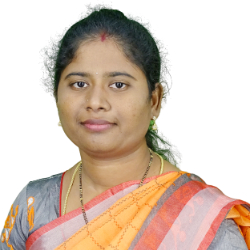
Ms. B Bhavani
Assistant Professor in CIVIL
ACEC31 - Disaster Management
Number of ELRV - 66
Duration - 35:43:06
Date of Completion – 09/05/2024


Disaster Management focuses on the principles and practices of preventing, preparing for, responding to, and recovering from natural and human-made disasters. It equips students with the knowledge and skills to reduce risks, manage emergencies, and enhance community resilience through effective planning and coordination.
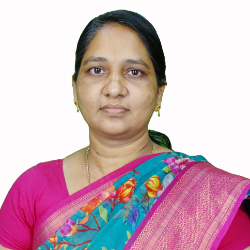
Dr. P Raja Kumari
Assistant Professor in Mathematics
AHSD08 - Differential Equation and Vector Calculus
Number of ELRV - 66
Duration - 37:36:07
Date of Completion – 15/06/2024


Differential Equations and Vector Calculus introduces mathematical techniques used to model and analyze engineering and scientific problems. It covers ordinary differential equations, vector algebra, vector differentiation and integration, gradient, divergence, curl, and line and surface integrals, providing essential tools for solving problems in physics, engineering, and applied sciences.
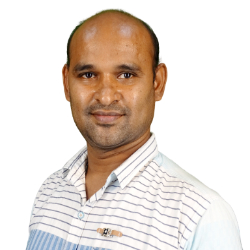
Dr. N Shankaraiah
Assistant Professor in PHYSICS
AHSD07 - Applied Physics
Number of ELRV - 67
Duration - 34:31:50
Date of Completion – 19/07/2024


Applied Physics introduces the fundamental principles of physics and their practical applications in engineering and technology. It covers topics such as mechanics, optics, electricity, magnetism, semiconductors, lasers, and modern materials, providing a strong scientific foundation for solving real-world engineering problems.
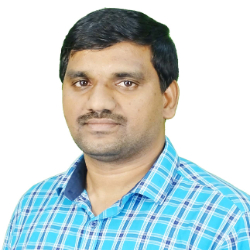
Mr. A Prashanth
Assistant Professor in ECE
AECC62 - Internet of Things
Number of ELRV - 66
Duration - 29:55:30
Date of Completion – 17/08/2024


Internet of Things (IoT) focuses on the design and development of interconnected smart devices that communicate over the internet. It covers sensors, actuators, embedded systems, communication protocols, cloud computing, data analytics, and IoT security, enabling students to build intelligent solutions for smart homes, healthcare, agriculture, industrial automation, and smart cities.
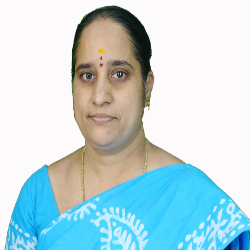
Dr. K Jagannayaki
Professor in MBA
AHSC13 - Business Economics and Financial Analysis
Number of ELRV - 66
Duration - 26:44:59
Date of Completion – 17/08/2024


Business Economics and Financial Analysis combines economic principles with financial management to support effective business decision-making. It covers topics such as demand analysis, market structures, cost and production, financial statements, ratio analysis, budgeting, and investment decisions, enabling students to evaluate business performance and make sound financial decisions.
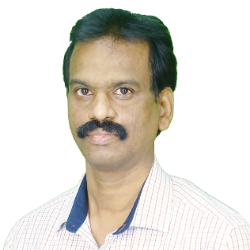
Dr. K China Apparao
Associate Professor in MECH
AAEC17 - Heat Transfer
Number of ELRV - 67
Duration - 36:35:15
Date of Completion – 19/08/2024


Heat Transfer introduces the fundamental principles of thermal energy transfer through conduction, convection, and radiation. It covers heat exchangers, thermal conductivity, transient and steady-state heat transfer, and practical engineering applications, enabling students to analyze and design efficient thermal systems used in industries, power plants, refrigeration, and aerospace engineering.
Dr. K Raghu Ram Mohan Reddy
Associate Professor in MECH
AMEC40 - Unconventional Machine Process
Number of ELRV - 68
Duration - 30:54:18
Date of Completion – 22/08/2024


Unconventional Machine Processes introduces advanced machining techniques used to manufacture hard, brittle, and complex materials that are difficult to machine using conventional methods. It covers processes such as Electrical Discharge Machining (EDM), Electrochemical Machining (ECM), Laser Beam Machining (LBM), Ultrasonic Machining (USM), and Water Jet Machining (WJM), enabling precision manufacturing with high accuracy and superior surface finish.

Dr. Kavita Singh
Assistant Professor in CIVIL
ACEC17 - Remote Sensing and GIS
Number of ELRV - 38
Duration - 35:21:55
Date of Completion – 23/08/2024


Remote Sensing and GIS focuses on the acquisition, analysis, and management of spatial data using satellite imagery and Geographic Information Systems (GIS). It covers remote sensing principles, image processing, spatial analysis, digital mapping, and geospatial applications, enabling students to solve real-world problems in environmental monitoring, agriculture, urban planning, disaster management, and natural resource management.

Dr. G Srinivasu
Assistant Professor in MATHEMATICS
AHSD08 - Differential Equation and Vector Calculus
Number of ELRV - 37
Duration - 35:03:35
Date of Completion – 24/08/2024


Differential Equations and Vector Calculus introduces mathematical techniques used to model and analyze engineering and scientific problems. It covers ordinary differential equations, vector algebra, vector differentiation and integration, gradient, divergence, curl, and line and surface integrals, providing essential tools for solving problems in physics, engineering, and applied sciences.
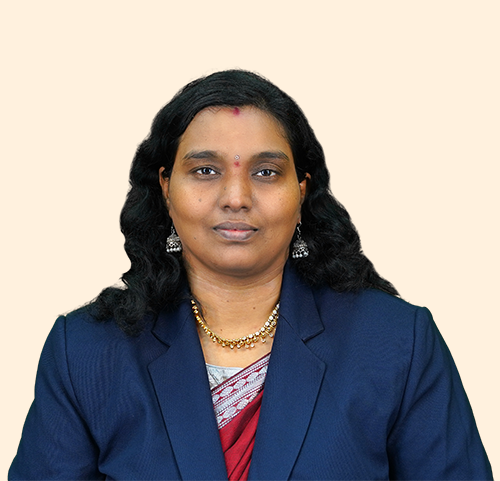
Dr. R Ramya Swetha
Assistant Professor in CIVIL
ACEC47 - Ground Improvement Techniques
Number of ELRV - 80
Duration - 35:08:30
Date of Completion – 30/10/2024


Ground Improvement Techniques focuses on methods used to enhance the engineering properties of soil for safe and stable construction. It covers soil stabilization, compaction, grouting, drainage, reinforcement, and chemical treatment methods, enabling students to improve soil strength, reduce settlement, increase load-bearing capacity, and ensure the stability of foundations and geotechnical structures.

Dr. Ranjith Kumar Gatla
Associate Professor in EEE
AEED02 - Electrical Circuits
Number of ELRV - 66
Duration - 35:11:54
Date of Completion – 14/11/2024


Electrical Circuits introduces the fundamental principles of electrical circuit analysis and design. It covers circuit elements, Ohm’s law, Kirchhoff’s laws, network theorems, AC and DC circuits, and transient analysis, providing the foundation for understanding and analyzing electrical and electronic systems.
Dr. J Glory
Assistant Professor in PHYSICS
AHSD07 - Applied Physics
Number of ELRV - 66
Duration - 35:08:55
Date of Completion – 09/12/2024


Applied Physics introduces the fundamental principles of physics and their practical applications in engineering and technology. It covers topics such as mechanics, optics, electricity, magnetism, semiconductors, lasers, and modern materials, providing a strong scientific foundation for solving real-world engineering problems.
Dr. GVR Seshagiri Rao
Professor in MECH
AMED06 - Solid Mechanics and Materials
Number of ELRV - 66
Duration - 36:14:07
Date of Completion – 26/12/2024


Solid Mechanics and Materials introduces the behavior of solid materials under various types of loads and stresses. It covers concepts such as stress, strain, elasticity, bending, torsion, and material properties, enabling students to analyze, design, and select engineering materials for safe and reliable structural applications.
Dr. GVR Seshagiri Rao
Professor in MECH
AMED33 - Engineering Tribology
Number of ELRV - 75
Duration - 33:21:06
Date of Completion – 30/12/2024


Engineering Tribology is the study of friction, wear, lubrication, and surface interactions in engineering systems. It covers lubrication techniques, bearing design, wear mechanisms, and material selection, helping improve the performance, efficiency, reliability, and lifespan of mechanical components and machines.

Ms. Bidyutlata Sahoo
Assistant Professor in CSE (AI&ML)
ACAD03 - Applied Artificial Intelligence
Number of ELRV - 66
Duration - 29:45:48
Date of Completion – 27/01/2026


Applied Artificial Intelligence focuses on the practical implementation of AI techniques to solve real-world engineering and business problems. It covers machine learning, deep learning, natural language processing, computer vision, and intelligent systems, enabling students to develop AI-driven applications for automation, prediction, decision-making, and data analysis across various domains.
Dr. A Naresh Kumar
Associate Professor in EEE
AEED17 - Power Electronics
Number of ELRV - 66
Duration - 33:09:15
Date of Completion – 02/02/2026


Power Electronics focuses on the conversion, control, and efficient utilization of electrical power using semiconductor devices. It covers power electronic converters, switching devices, rectifiers, inverters, choppers, and motor drives, enabling students to design and analyze energy-efficient systems for industrial automation, renewable energy, electric vehicles, and power transmission applications.

Dr. G Hima Bindu
Assistant Professor in MECH
AMEC32 - Robotics
Number of ELRV - 68
Duration - 28:08:53
Date of Completion – 07/02/2026
Robotics focuses on the design, analysis, programming, and control of robotic systems used in industrial and intelligent automation. It covers robot kinematics, dynamics, sensors, actuators, control systems, machine vision, and artificial intelligence, enabling students to develop autonomous and intelligent robots for manufacturing, healthcare, agriculture, logistics, and other real-world applications.
Mr. E Krishna Rao Patro
Assistant Professor in CSE
- Java Program
Number of ELRV - 66
Duration - 42:18:09
Date of Completion – 16/02/2026


Java Programming introduces the fundamentals of programming using the Java language, with a strong emphasis on object-oriented programming concepts. It covers classes, objects, inheritance, polymorphism, exception handling, multithreading, collections, and file handling, enabling students to develop secure, platform-independent, and scalable applications for desktop, web, and enterprise environments.









 Work with Us
 Campus Map
 How to Reach Us
 Online Degree Verification
 IARE Mail
 Photo Gallery
 Virtual Tour