
812 Campus Placements - 2026 :
720 Campus Placements - 2025 :
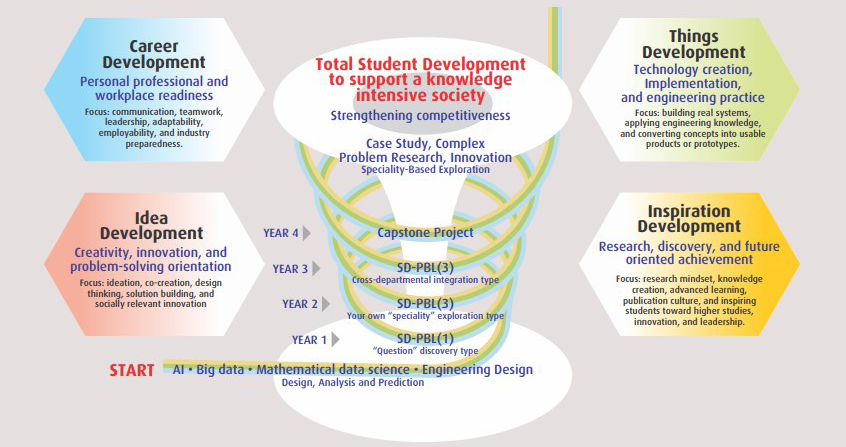
In modern engineering education, teaching pedagogies are evolving to meet the needs of students learning. By combining traditional methods with innovative approaches like flipped classrooms, simulations, industry tie-ups, internships, technology driven interactive learning (Augmented Reality/Virtual Reality), practical problem solving, case studies and real-world problems, for better preparation of students for a rapidly changing technological landscape. Each pedagogy offers distinct advantages and challenges, making it crucial to integrate multiple strategies for the most effective learning experience.
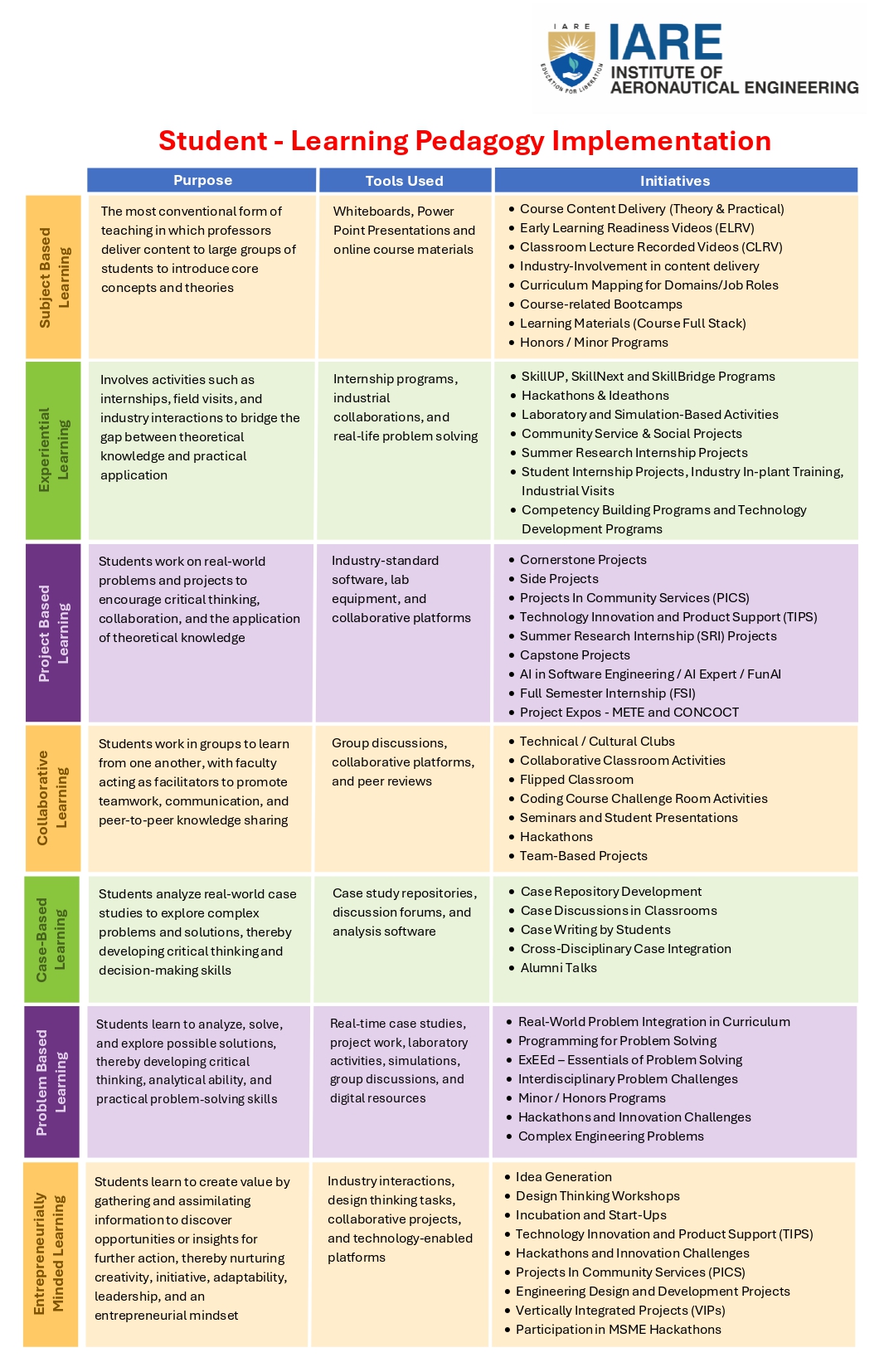
IARE learning management design tools (i.e. Akanksha, Aksha and BuildIT) are in use for instructional design, digital learning and administration of content to create lesson planning, self-paced learning of courses, e-learning, and pedagogical planner. Below are several pedagogical approaches, how they differ, how they complement each other, and some evidence of what works in practice.
The Student Learning Pedagogy Implementation focuses on adopting diverse, student-centered approaches that enhance knowledge, skills, and innovation through active participation and experiential engagement. It integrates various methods such as Subject-Based Learning (SBL), which emphasizes mastery of core concepts through lectures, tutorials, practicals, and self-learning; Experiential Learning (EL), where students learn by doing and reflecting on real-world experiences; Project-Based Learning (PBL), which encourages teamwork and application of multidisciplinary knowledge through complex projects; Active and Collaborative Learning (ACL), promoting peer interaction and shared problem solving; Case-Based Learning (CBL), which builds analytical and decision-making skills using real or simulated professional scenarios; Problem-Based Learning (PrBL), fostering critical thinking and self-directed inquiry through structured problem-solving exercises; and Entrepreneurially Minded Learning (EML), inspiring creativity, innovation, and value creation through opportunity recognition and action. Together, these pedagogical approaches shift the focus from passive learning to active engagement, ensuring that students not only gain academic knowledge but also develop practical, analytical, and entrepreneurial skills essential for success in a dynamic global environment.









 Work with Us
 Campus Map
 How to Reach Us
 Online Degree Verification
 IARE Mail
 Photo Gallery
 Virtual Tour